2022–2025
Hyperledger Iroha
Open-source blockchain framework for enterprise and government
Context
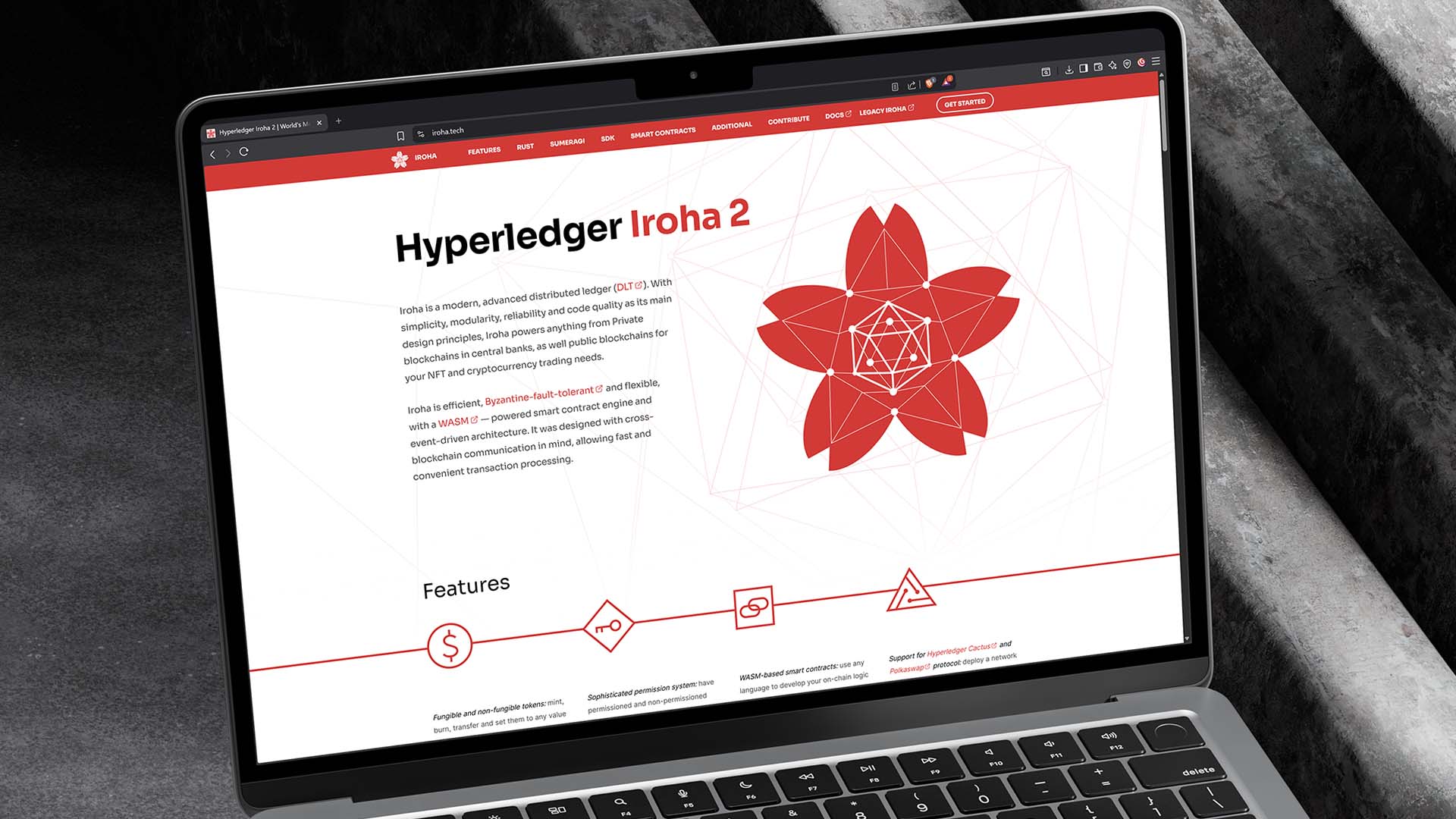
Hyperledger Iroha is an open-source blockchain framework originally created by Soramitsu and contributed to the Linux Foundation's Hyperledger project (now LF Decentralized Trust). It's the technology underpinning some of the most significant real-world blockchain deployments in existence — Cambodia's Bakong CBDC (11M+ users, $300M+ daily transactions), Palau's blockchain-based savings bonds, and CBDC proof-of-concepts for Laos, Solomon Islands, and Papua New Guinea, as well as Fraud Intelligence Limited telco fraud prevention blockchain.
Iroha 2 represents a ground-up rewrite in Rust, introducing WASM-based smart contracts, an event-driven architecture, the Sumeragi Byzantine fault-tolerant consensus mechanism, out-of-order instruction execution, a sophisticated multi-level permission system, and native support for fungible and non-fungible tokens.
My Role
This was a design leadership engagement. I assigned my lead product designer to the project, provided high-level direction and ongoing feedback, and ensured the work drew on our established multi-brand design system. The explorer was designed in close collaboration with the Iroha engineering team, who defined the data model and API surface while our design team shaped how that data would be presented to users.
The Challenge
Block explorers are inherently complex. They need to surface blocks, transactions, accounts, domains, tokens (fungible and non-fungible), smart contract events, and network telemetry, each with deep detail views and cross-referenced relationships.
Iroha makes this even more challenging than a typical blockchain explorer because of its unique architecture. Iroha introduces the concept of Domains — organizational containers for accounts and assets that have no equivalent in Ethereum or Bitcoin explorers. The permission system is multi-layered. And because Iroha targets both enterprise and public blockchain use cases, the explorer needs to serve both blockchain developers debugging smart contracts and central bank administrators monitoring network health.
Approach
Design system as foundation
The explorer was built on the multi-brand, multi-product design system we had developed through our work on Polkaswap and subsequent products. We retained subtle neumorphic touches from the broader SORA/Soramitsu design language, giving the explorer a distinctive warmth uncommon in developer tooling.
Comprehensive semantic token system
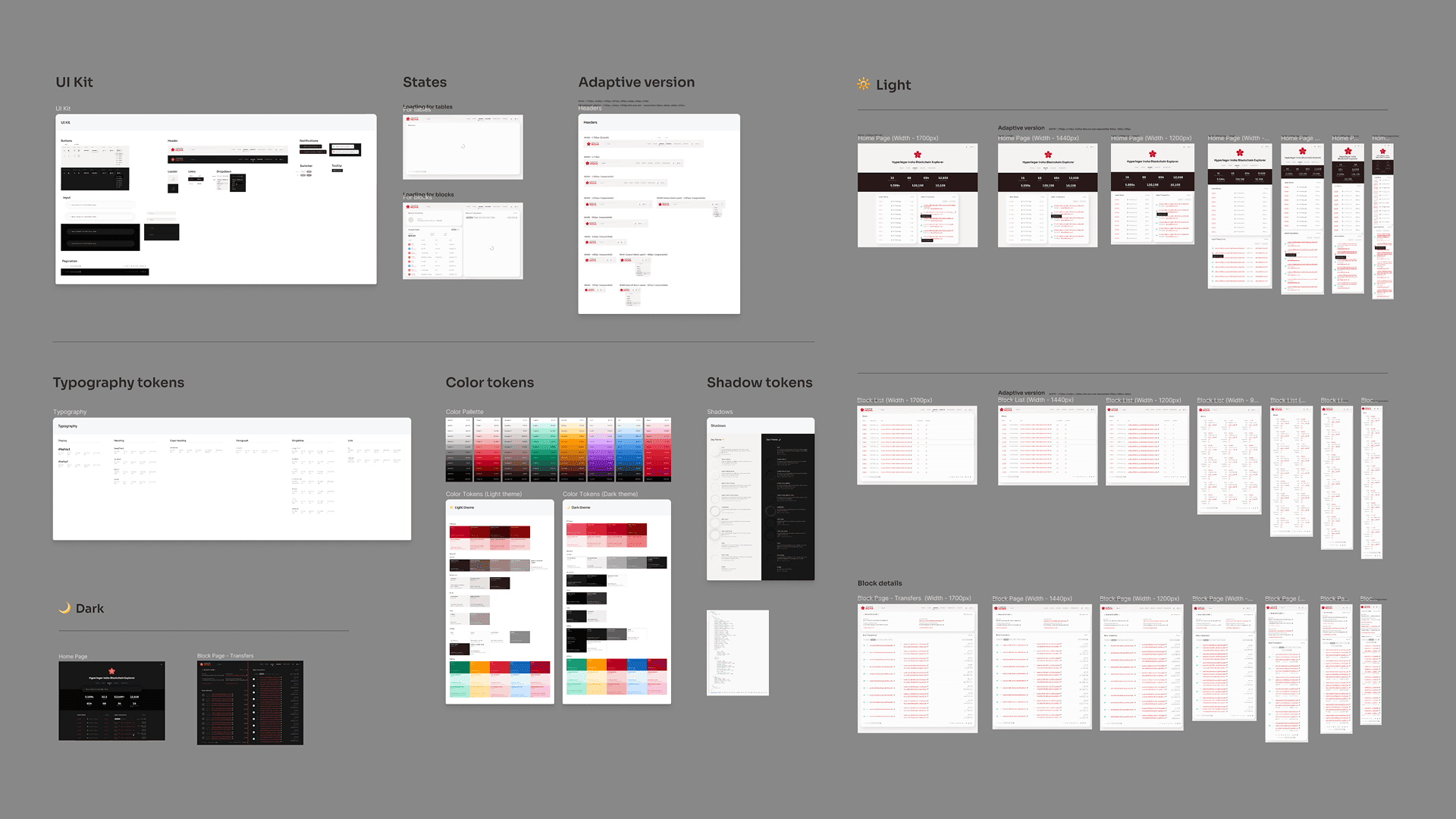
The explorer's design system is built on a rigorous token architecture. The color system spans a full palette mapped to semantic roles through light and dark theme token sets. This level of tokenization ensures the explorer can be reliably themed for different Iroha network deployments.
Seven-breakpoint responsive design
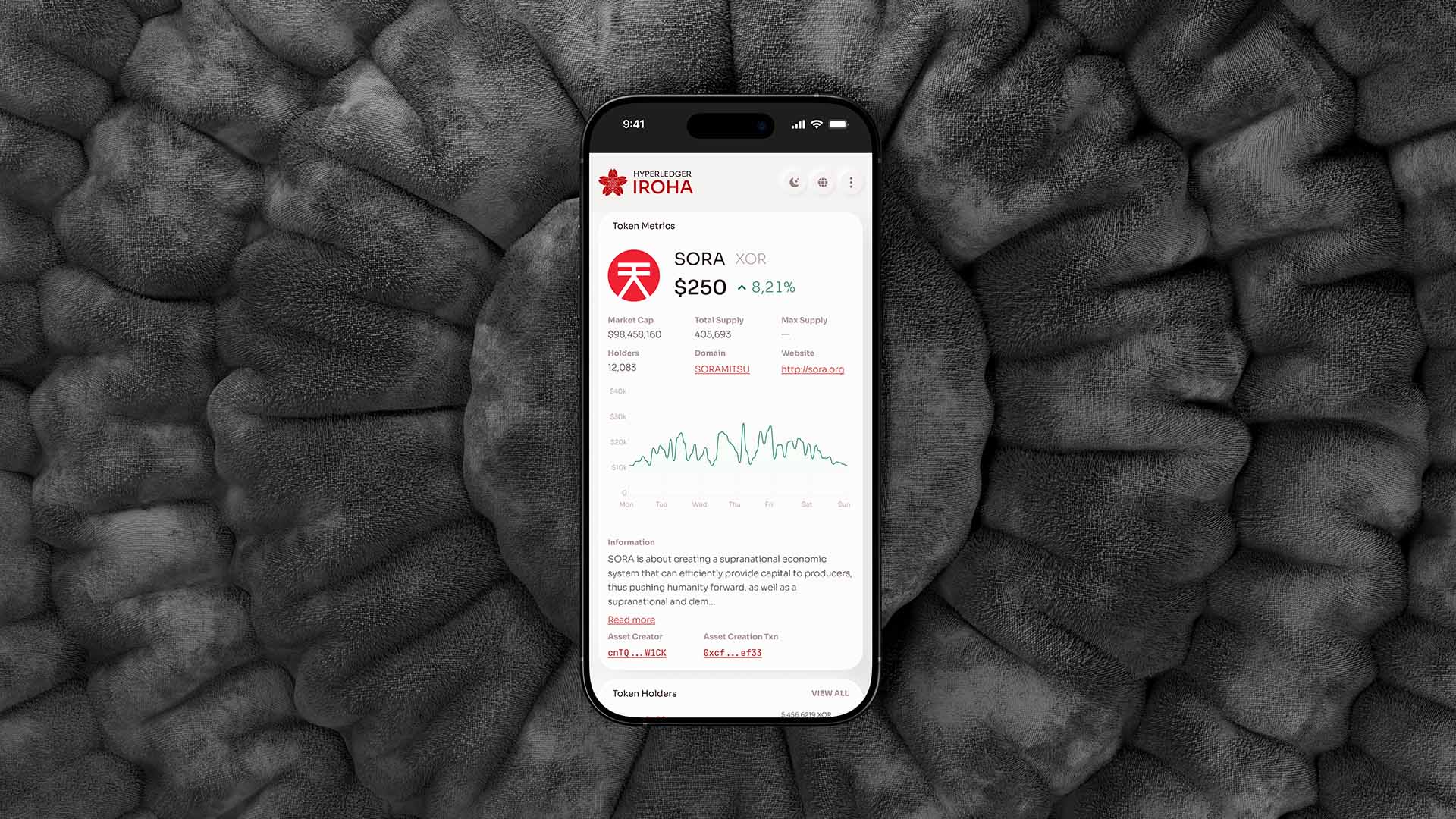
The explorer was designed with full adaptive layouts across seven breakpoints: 1700px, 1440px, 1200px, 960px, 640px, 480px, and 320px. At 320px, the explorer remains fully functional, critical for developers inspecting transactions on mobile during debugging.
Key Design Decisions
Dashboard: network health at a glance
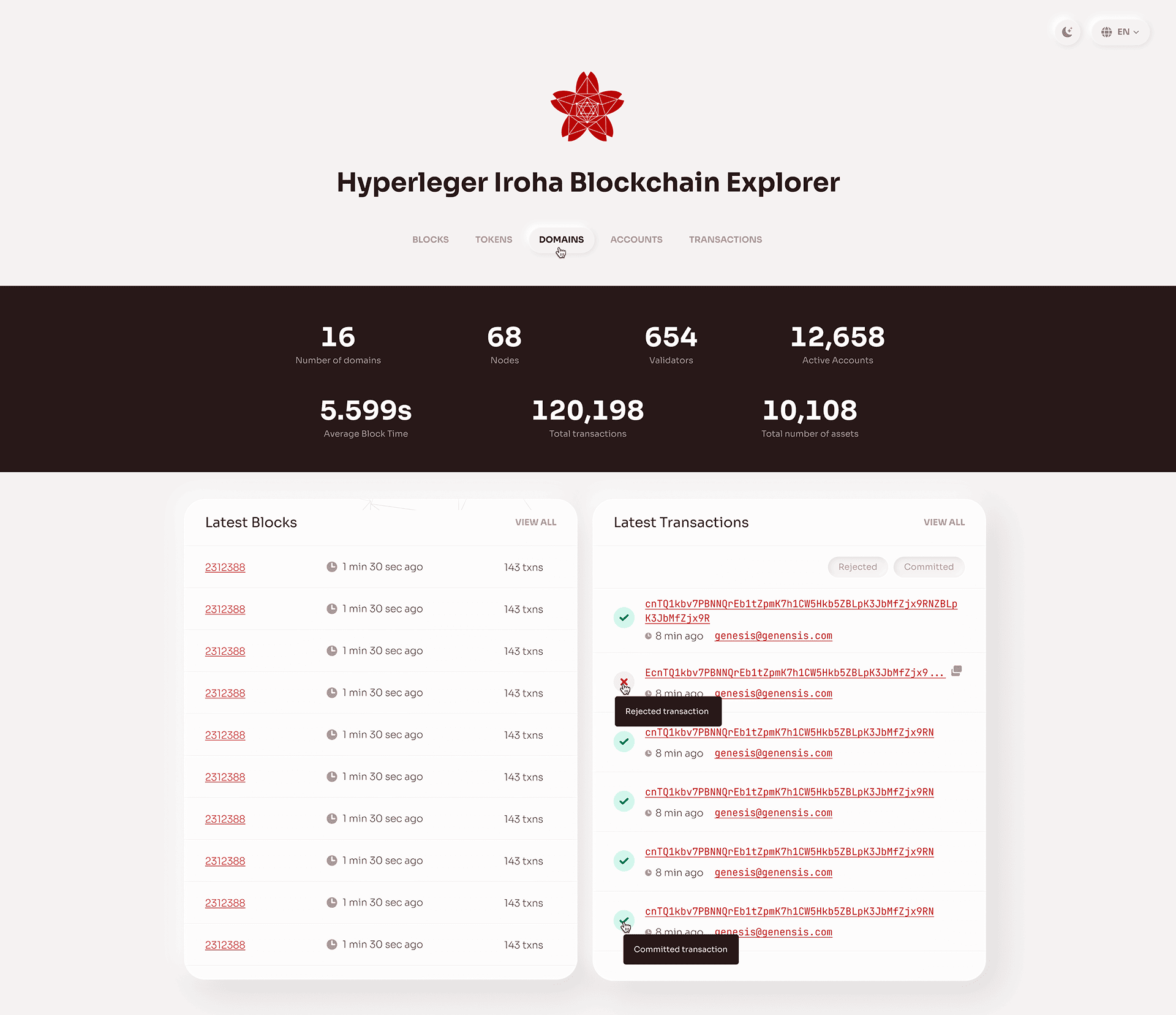
The home page surfaces the most important network metrics immediately: peer count, block height, domain count, active accounts, average block time, total transactions, and total assets. Below, dual columns show Latest Blocks and Latest Transactions in real-time.
Domain-centric information architecture
Unlike Ethereum explorers that organize around addresses, the Iroha explorer's navigation reflects Iroha's unique data model: Blocks, Tokens, Domains, Accounts, Transactions, and Telemetry as top-level navigation items. The Domains section is a first for blockchain explorer design, because domains are a first for blockchain architecture.
Transaction detail: full traceability
Transaction pages show everything needed for debugging and auditing: hash, timestamp, confirmation time, status, block reference, multisignature details, transaction and gas fees, and a structured breakdown of all operations with clickable cross-references. The Overview/Code toggle lets developers switch between human-readable and raw transaction data.
iroha.tech — Product Website
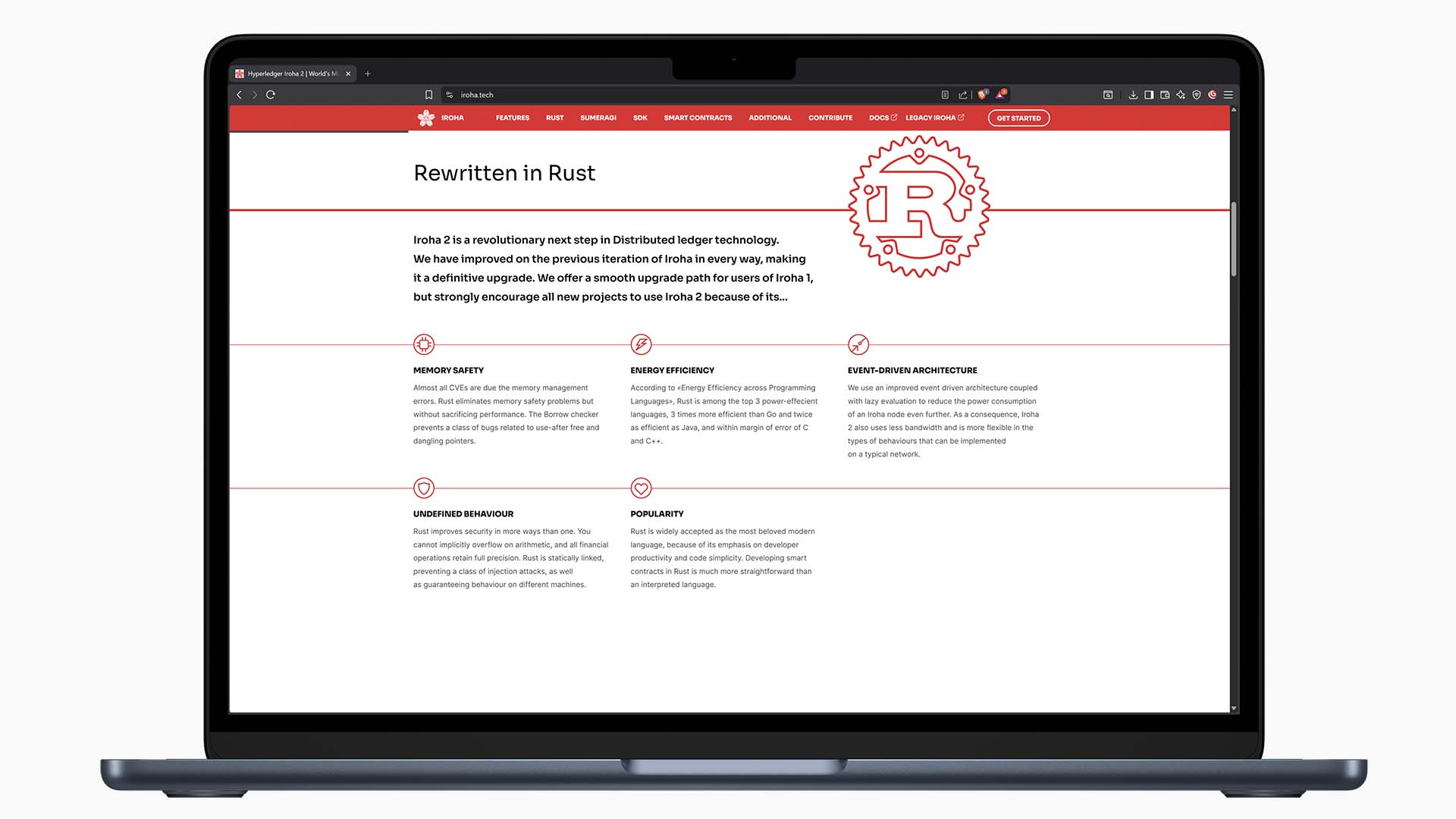
Alongside the block explorer, my team designed and built the Hyperledger Iroha 2 product website. The site walks through Iroha's key differentiators in a structured narrative: the Rust rewrite, the Sumeragi consensus mechanism, SDK support, and smart contract capabilities. The site serves as the primary entry point for the open-source community.
Impact
Reflections
Data-dense design is its own specialty. We were primarily designing consumer mobile and web apps where the goal was generally to reduce information on screen. The explorer demanded the opposite: maximum information density with maximum clarity. Every pixel of whitespace, every column alignment, every typographic hierarchy decision matters more when you're displaying twelve columns of blockchain data across seven breakpoints.
Unique data models require unique IA. You can't just clone Etherscan or Subscan navigation for an Iroha explorer.